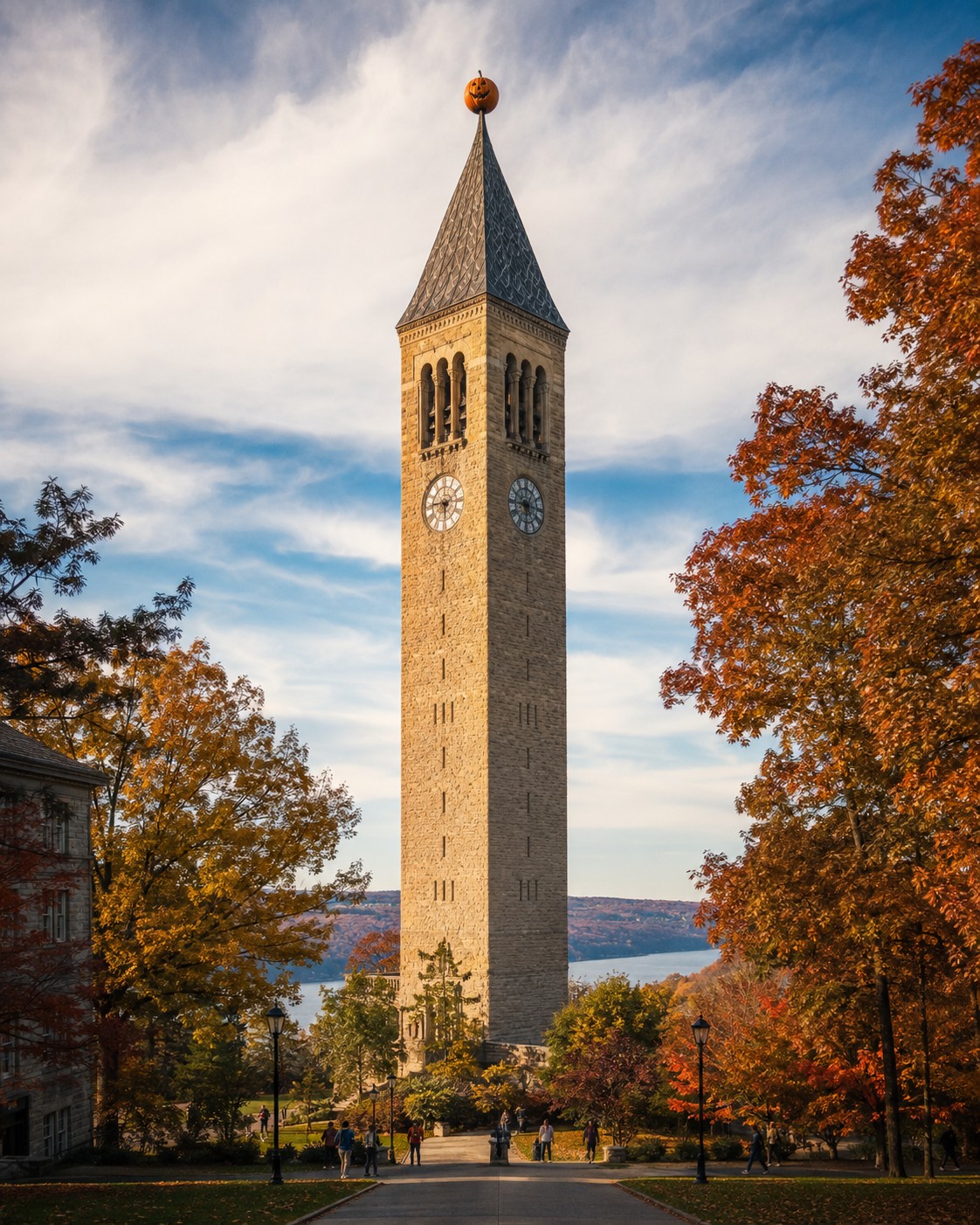
In October 1997, someone somehow placed a large hollowed-out pumpkin on the lightning rod at the very top of McGraw Tower at Cornell — 173 feet above the ground.
No one admitted doing it. No one could explain how it had been done. And so Cornell, confronted with an unidentified gourd in a position of architectural authority, responded with admirable seriousness.
The university created PumpkinCam. Engineers explored remote sampling devices. Horticulturalists debated whether the object was even organic. The pumpkin remained in place for 158 days, enduring an Ithaca winter while an Ivy League institution attempted, with proper academic rigor, to come to terms with it.
When the object finally came down in March 1998, Cornell scientists examined it and reached the indispensable scholarly conclusion that it was, in fact, a pumpkin.
The identity of the original installer has never been resolved. The mystery remains.
For five months, an Ivy League university conducted what was essentially peer review on a vegetable.
That may be the most Cornell sentence ever written.
#TheModernRaconteur #McGrawTowerPumpkin #Serendipity #ElegantNonsense